Trout Vision and Color Selection: Matching Lures to Water Clarity
Trout eyes detect ultraviolet light and subtle contrasts. Learn how water clarity dictates whether fluorescent chartreuse or natural olive gets bit.
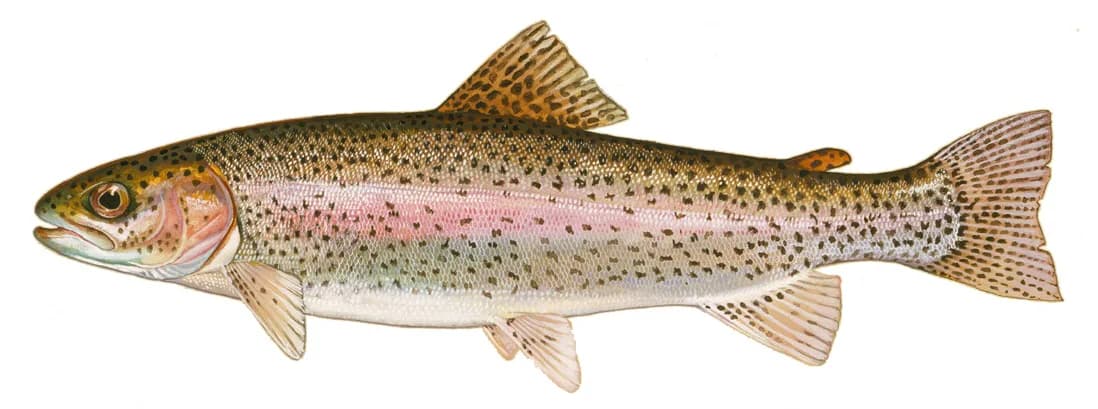
The anatomy of a trout's eye: cones and ultraviolet vision
A trout relies on vision more than any other sense to capture moving food. Unlike humans, who possess trichromatic vision (red, green, and blue cones), salmonids like rainbow trout and brown trout possess a fourth cone type sensitive to ultraviolet light.
UV vision allows trout to detect subtle transparent zooplankton, water flea carapaces, and tiny insect wings that reflect ultraviolet light in clear water. Understanding this optical ability helps explain why specific lure patterns consistently outperform others.
Color filtering by depth: the red drop-off
As sunlight penetrates the water surface, water molecules and dissolved minerals absorb light rays. Long wavelengths with low energy disappear first, while short, energetic wavelengths penetrate deepest.
- Red light: Completely filtered out by 10 to 15 feet of depth. A bright red lure appears dull grey or black below this zone.
- Orange and yellow: Retain true color down to 20 to 30 feet before shifting to neutral grey tones.
- Green and blue: Penetrate deepest into clean freshwater, remaining visible down to 50 feet or more.
- Fluorescent pigments: Convert invisible ambient UV radiation into visible light, glowing brightly even in deep or shaded water.
Matching lure selection to water clarity
Water clarity should dictate the contents of your tackle box. When spring runoff or summer algae blooms reduce visibility under two feet, contrast and vibration matter more than natural imitation.
In murky or stained water, choose high-contrast lures: dark solid black silhouettes that stand out against surface light, or hot fluorescent chartreuse and firetiger patterns. In crystal-clear mountain reservoirs, switch to translucent smoke, olive marabou, and subtle metallic flashes. For proven tackle recommendations, browse our guide to best lures and bait for stocked trout.
Hatchery conditioning and artificial bait colors
Hatchery trout spend their first year eating brown floating fish pellets. When newly planted, they investigate round objects floating in the water column. While tan and brown dough baits match pellet colors, bright pink, chartreuse, and white dough balls produce high visibility that attracts curious fish from farther away.
Proven Rigs for Stocked Waters
Tactical terminal rigs calibrated for recently stocked gamefish behavior and feeding habits.
12–18 inches off bottom substrate
14–20" of 3–4 lb test fluorocarbon
1/4–1/2 oz sliding egg sinker, 6mm bead, size 10 barrel swivel, size 16 treble or size 10 salmon egg hook
Recommended Tackle & Angler Gear
Field-tested tackle, baits, and essentials matched to the species and waters featured in this guide.
Berkley PowerBait Floating Trout Dough
Hatchery-raised trout are conditioned to pelleted scents; scented dough floated 12–18 inches off bottom consistently triggers strikes.
Panther Martin Classic Teardrop Inline Spinner
The heavy convex blade spins instantly upon retrieval, sending vibration through the water that triggers aggressive reaction bites along drop-offs.
Sliding Sinker & Treble Hook Rigging Kit
Sliding egg sinkers allow cautious trout to run with bait without feeling line drag, while size 14–16 treble hooks keep dough bait securely pinned.
As an Amazon Associate, StockedWaters earns from qualifying purchases at no additional cost to you. Recommendations are chosen for hatchery-conditioned fish behavior and ethical rigging. We may receive a referral commission if you buy through these links. Read our editorial policy & standards.
Frequently asked
Can trout see color, or do they see in black and white?
Trout possess sophisticated color vision. Their retinas contain four distinct cone types that detect red, green, blue, and near-ultraviolet (UV) wavelengths. Their color perception is particularly sharp in shallow water under natural sunlight.
Why are fluorescent colors like chartreuse and pink effective for stocked trout?
Hatchery trout are conditioned to identify pellet food, but fluorescent pigments reflect ambient UV light that penetrates deeper through stained or murky water. Bright chartreuse and fluorescent orange create high optical contrast against dark lake bottoms.
What lure colors work best in crystal-clear water?
In clear water with over six feet of visibility, bright fluorescent lures can appear unnatural and spook wary fish. Natural tones such as olive, dark brown, matte black, and subtle silver or gold finishes mimic natural forage without alarming fish.
How does water depth alter color visibility?
Water filters light by wavelength. Red light is absorbed first within the top 10 to 15 feet of water. Orange and yellow fade next, while blue, green, and UV wavelengths penetrate deepest into the water column.