Acclimation and Transport Stress: How Tank Conditions Affect Feeding
Transporting thousands of fish requires liquid oxygen and temperature balancing. Learn why trout need 24 to 48 hours to recover from truck travel.
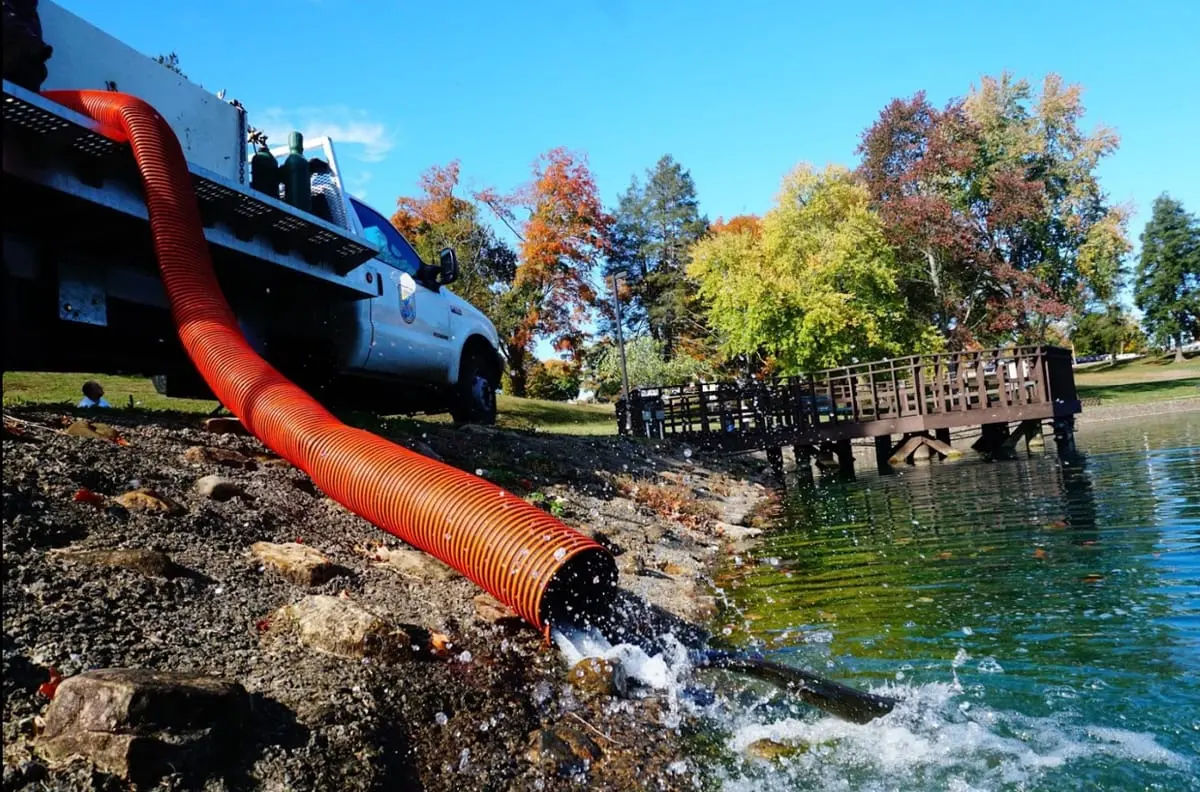
The physiological journey inside a hatchery tanker
Stocking trout into public waters is more than backing a truck up to a boat ramp and pulling a release valve. Before a batch of rainbow trout reaches a lake managed by the Utah Division of Wildlife Resources, the fish complete a demanding road trip.
Fish are netted from hatchery raceways, weighed, and loaded into insulated tank compartments at densities up to one pound of fish per gallon of water. Even with pure liquid oxygen bubbling through diffusers, the journey induces physiological stress.
Thermal shock and the tempering protocol
Hatchery rearing water usually flows from deep springs at a constant 50°F to 54°F. In late spring or summer, receiving lake waters may sit at 62°F or higher. Dropping a trout directly across an eight-degree temperature differential causes thermal shock, impairing heart and gill function.
- The 5-degree rule: Hatchery drivers aim for less than a 5°F difference between tank water and lake water before releasing fish.
- Pumping lake water: Drivers use intake hoses to pump lake water into the tank baffles, gradually adjusting tank temperature over 15 to 30 minutes.
- pH balancing: Tempering also reconciles differences in water hardness and pH between the hatchery source and the receiving reservoir.
The 24 to 48 hour recovery timeline
When released through the chute, newly stocked trout often huddle in tight, motionless pods in shallow water near the ramp. Their blood cortisol levels are high and their digestive systems are suppressed from transport stress.
Within 24 to 48 hours, blood chemistry stabilizes, lactic acid clears, and fish begin exploring the shoreline in search of food. For a complete day-by-day breakdown of post-stocking behavior, read our guide on when to fish after a stocking.
Checking Utah stocking dates
Anglers in northern Utah can track delivery dates for waters near Ogden stocked waters or browse our complete Utah fish stocking directory to time trips several days after verified plants.
The StockedWaters Verification Pipeline
How state wildlife department stocking records are gathered, verified, geocoded, and published.
Agency Data Ingestion
CDFW · WDFW · FWP · DWR · DEC
Each data release pulls stocking records from official state wildlife agency open-data portals and published reports.
Taxonomy & Alias Resolution
Standardized Biological Profiles
Resolves conflicting agency abbreviations (e.g., 'RT', 'CATCHABLE RB', 'RAINBOW TROUT') into canonical species profiles with size parsing.
GNIS Spatial Geocoding
USGS GNIS Name Matching
Waterbodies are matched to USGS Geographic Names Information System names and coordinates where a confident match exists. Unmatched waters stay off maps and near-me lists rather than being guessed.
Date-Precision Guard
Zero-Fabrication Data Standard
We preserve the agency's reporting precision: day, week, month, or year. Dates are never invented or made more precise than the source.
Recommended Tackle & Angler Gear
Field-tested tackle, baits, and essentials matched to the species and waters featured in this guide.
Berkley PowerBait Floating Trout Dough
Hatchery-raised trout are conditioned to pelleted scents; scented dough floated 12–18 inches off bottom consistently triggers strikes.
Panther Martin Classic Teardrop Inline Spinner
The heavy convex blade spins instantly upon retrieval, sending vibration through the water that triggers aggressive reaction bites along drop-offs.
Sliding Sinker & Treble Hook Rigging Kit
Sliding egg sinkers allow cautious trout to run with bait without feeling line drag, while size 14–16 treble hooks keep dough bait securely pinned.
As an Amazon Associate, StockedWaters earns from qualifying purchases at no additional cost to you. Recommendations are chosen for hatchery-conditioned fish behavior and ethical rigging. We may receive a referral commission if you buy through these links. Read our editorial policy & standards.
Frequently asked
Why do freshly stocked trout sometimes refuse to bite on day one?
During transport in hatchery trucks, trout endure crowding, motion, and elevated carbon dioxide. When released, their blood cortisol and lactic acid levels are elevated. Fish often require 24 to 48 hours to rebalance their internal chemistry before feeding actively.
What is water tempering and why do hatchery drivers do it?
Tempering is the process of gradually mixing lake water into the truck transport tanks using a portable pump before release. This equalizes water temperature and pH, preventing thermal shock that can kill fish if temperature differences exceed 5 degrees.
How do hatchery trucks keep thousands of fish alive for hours?
Tanker trucks use insulated aluminum tanks equipped with compressed liquid oxygen systems, micro-pore diffusers, and water circulation pumps that maintain dissolved oxygen levels between 10 and 15 parts per million throughout the journey.
How long after stocking is the best time to fish?
Catch rates typically peak between day three and day ten after release. By day three, fish have fully acclimated to local water conditions, broken out of tight holding pods, and begun foraging naturally along shorelines.