Catch and Release for Stocked Trout: Water Temperatures and Handling
Stocked trout experience physiological stress when caught. Here are temperature limits, net handling practices, and hook styles that preserve released fish.
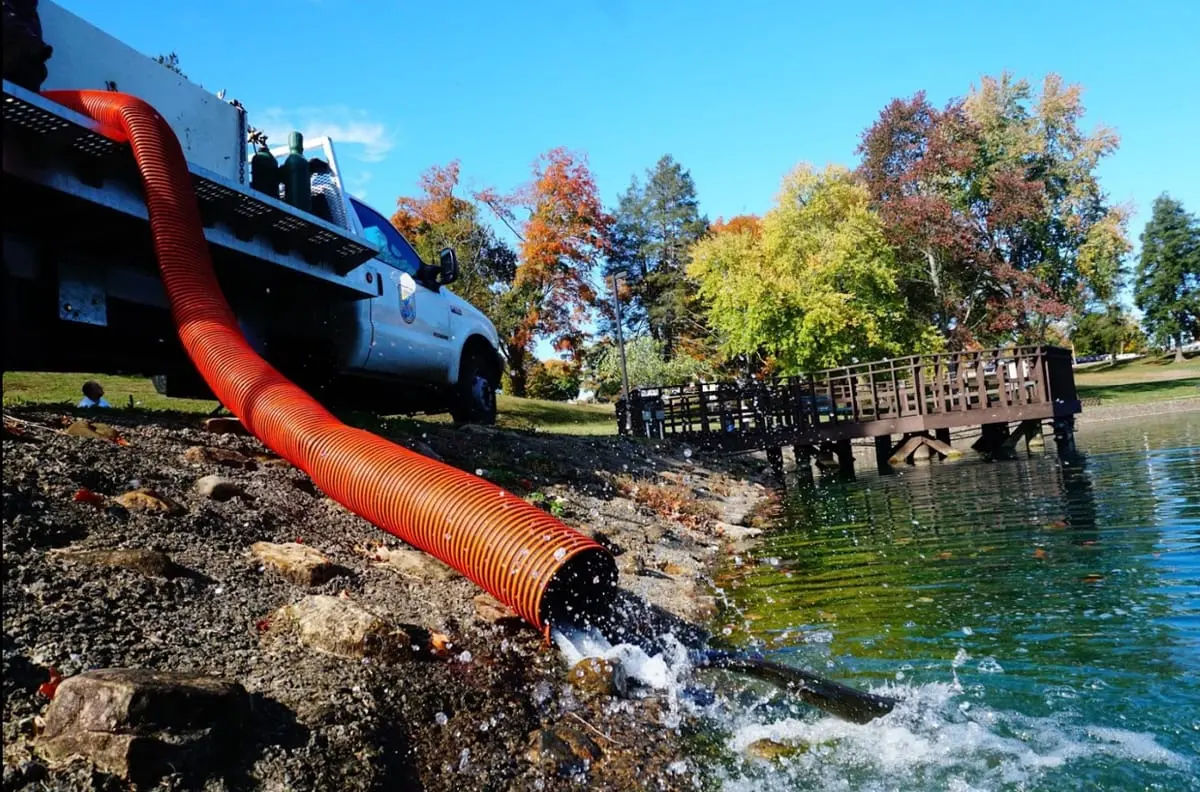
The biology of stress in hatchery-raised trout
Many anglers assume that if a hooked trout swims away vigorously upon release, it survives. Fisheries research conducted by agencies like the United States Geological Survey shows that delayed mortality can kill up to 35% of caught-and-released trout within 48 hours if handling protocols are neglected.
When a trout fights against a fishing line, its muscles produce high levels of lactic acid. Hatchery fish, which spend their development in crowded raceways with regular feeding, possess lower aerobic fitness than wild fish. In warm water, this metabolic stress becomes lethal.
The 67-degree threshold: when to stop releasing fish
Water temperature is the single most critical factor in fish survival. As water warms, its capacity to hold dissolved oxygen decreases. At the same time, a cold-water fish requires more oxygen to maintain its body functions.
Carry a stream thermometer. When surface water reaches 67°F, stop catch-and-release fishing for trout. If you continue fishing, switch to harvesting your legal limit for the table, as explained in our guide on trout limits across five states, or target warmwater species like bass and catfish. See also our review of summer trout survival limits.
Best handling practices: landing nets and air exposure
Proper handling begins before the fish leaves the water. Implementing four mechanical adjustments dramatically improves survival rates:
- Use rubber mesh landing nets: Knotted nylon nets abrade scales and remove the protective mucus coat. Knotless rubber mesh cradles fish gently.
- Keep the fish submerged: Every second out of water deprives gills of oxygen. Keep the fish submerged in the net while removing hooks.
- Pinch hook barbs: Use needle-nose pliers to crush hook barbs flat. Barbless single hooks slide out in seconds with minimal tissue damage.
- Cut the line on deep hooks: If a fish swallows a bait hook into its gullet, do not yank it out. Snip the leader close to the mouth. Stomach acids dissolve thin wire hooks over time.
Revival technique in lake and river water
Never throw a tired trout back into the water. In lakes, hold the fish gently upright under its belly in clean water until its gills pulse steadily and it kicks out of your grip. In rivers, face the fish head-first into a gentle current so fresh water flows over its gills naturally.
The StockedWaters Verification Pipeline
How state wildlife department stocking records are gathered, verified, geocoded, and published.
Agency Data Ingestion
CDFW · WDFW · FWP · DWR · DEC
Each data release pulls stocking records from official state wildlife agency open-data portals and published reports.
Taxonomy & Alias Resolution
Standardized Biological Profiles
Resolves conflicting agency abbreviations (e.g., 'RT', 'CATCHABLE RB', 'RAINBOW TROUT') into canonical species profiles with size parsing.
GNIS Spatial Geocoding
USGS GNIS Name Matching
Waterbodies are matched to USGS Geographic Names Information System names and coordinates where a confident match exists. Unmatched waters stay off maps and near-me lists rather than being guessed.
Date-Precision Guard
Zero-Fabrication Data Standard
We preserve the agency's reporting precision: day, week, month, or year. Dates are never invented or made more precise than the source.
Recommended Tackle & Angler Gear
Field-tested tackle, baits, and essentials matched to the species and waters featured in this guide.
Berkley PowerBait Floating Trout Dough
Hatchery-raised trout are conditioned to pelleted scents; scented dough floated 12–18 inches off bottom consistently triggers strikes.
Panther Martin Classic Teardrop Inline Spinner
The heavy convex blade spins instantly upon retrieval, sending vibration through the water that triggers aggressive reaction bites along drop-offs.
Sliding Sinker & Treble Hook Rigging Kit
Sliding egg sinkers allow cautious trout to run with bait without feeling line drag, while size 14–16 treble hooks keep dough bait securely pinned.
As an Amazon Associate, StockedWaters earns from qualifying purchases at no additional cost to you. Recommendations are chosen for hatchery-conditioned fish behavior and ethical rigging. We may receive a referral commission if you buy through these links. Read our editorial policy & standards.
Frequently asked
Do stocked trout survive catch and release as well as wild trout?
Stocked trout have higher post-release mortality rates than wild trout under identical conditions. Hatchery-reared fish have lower fin quality, higher baseline stress levels, and take longer to recover from lactic acid accumulation after an exhausting fight.
What is the maximum water temperature for safe trout release?
Anglers should avoid catch-and-release fishing when water temperatures reach 67°F or higher. At 68°F and above, dissolved oxygen drops sharply, and the physiological exhaustion of fighting a hook causes high delayed mortality, even if the fish swims away.
How does hook type affect trout survival rates?
Studies demonstrate that single barbless hooks cause under 5% hooking mortality, whereas treble hooks and barbed bait hooks that are swallowed deeply can cause mortality rates exceeding 30%. Cutting the line on deeply hooked fish doubles their chance of survival.
Why should anglers wet their hands before touching a trout?
Trout possess an external mucus layer that protects their skin from bacterial and fungal infections. Dry hands, abrasive cloth gloves, and dry boat surfaces strip this protective slime, exposing the fish to lethal skin lesions weeks after release.